The Media and Conflict Memory: an interdisciplinary workshop was held at the University of Glasgow on 22–23 November 2023. The event brought together scholars to explore the role of media in conflict memory work, adopting a broad definition of conflict that encompassed armed insurrections, civil disorder, interstate tensions, political violence in divided societies, terrorist attacks, and wars. It fostered rich interdisciplinary discussions about how media shapes understandings of past conflicts.
The workshop was co-sponsored by the Crisis, Security and Conflict Communication and Communication in Post and Neo-Authoritarian Societies Working Groups of the International Association of Media and Communication Researchers (IAMCR), and organised by Dr Paul Reilly (University of Glasgow), Dr Virpi Salojärvi (University of Vaasa/University of Helsinki), and Dr Katja Lehtisaari (Tampere University).
I had the opportunity to present my paper:
“Don’t Want to Remember, Can’t Forget”: Unveiling Sticky Memories and Mobile Traumas of Delhi Riots 2020
This article examines the long-term impact of communal violence and its complex interplay with memory in the aftermath of the Delhi Riots of 2020. Focused against the background of data collected in Delhi, India, during three years from 2020 to 2023, employing a complex method that combines digital and sensory ethnography, the article dives into the experiences of two riot survivor, each of whom experienced horrible occurrences during the riots. The first survivor, a Muslim man who had previously experienced three Hindu-Muslim riots, had to watch his brother be shot and set afire during the Delhi 2020 riots. The second survivor, a Muslim woman, describes the harrowing memory of seeing a man being hacked to death with swords. This encounter resulted in the partial loss of her eyesight. Despite doctors’ and counsellors’ recommendations to move on, both survivors are still dealing with the long-term effects of their terrible experiences three years after the riots. Their testimonials shed light on the vast complexities of trauma’s hold on memory. While both indicate a wish to move on from their violent pasts, the study reveals an irony: their smartphone galleries are filled with gory photographs and videos from the riots, serving as devastating memories of the tragedy they experienced. The research site captures the interaction between personal narratives, collective memory, and the haunting persistence of trauma as revealed through sensory ethnography. This immersive method highlights the complex, nuanced ways that memory develops and remains, transcending the boundaries of individual recollections and forming particular identities. This article provides a thorough analysis of how survivors’ narratives of communal violence become entangled with memory and trauma. The research offers a nuanced view of the effects of community violence by using a variety of approaches. The results reveal the complexity of memory’s involvement with violent events, provoking us to think about the wider implications for personal recovery, collective memory, and the transformative use of digital and mobile technologies in memorialising trauma and tragedies. Furthermore, the study delves into the broader implications of such mediatized memories, particularly in a country on the verge of Muslim genocide (Genocide Watch Assessment, 2023), where divisions between Hindus and Muslims are widening with state-supported digital statecraft.
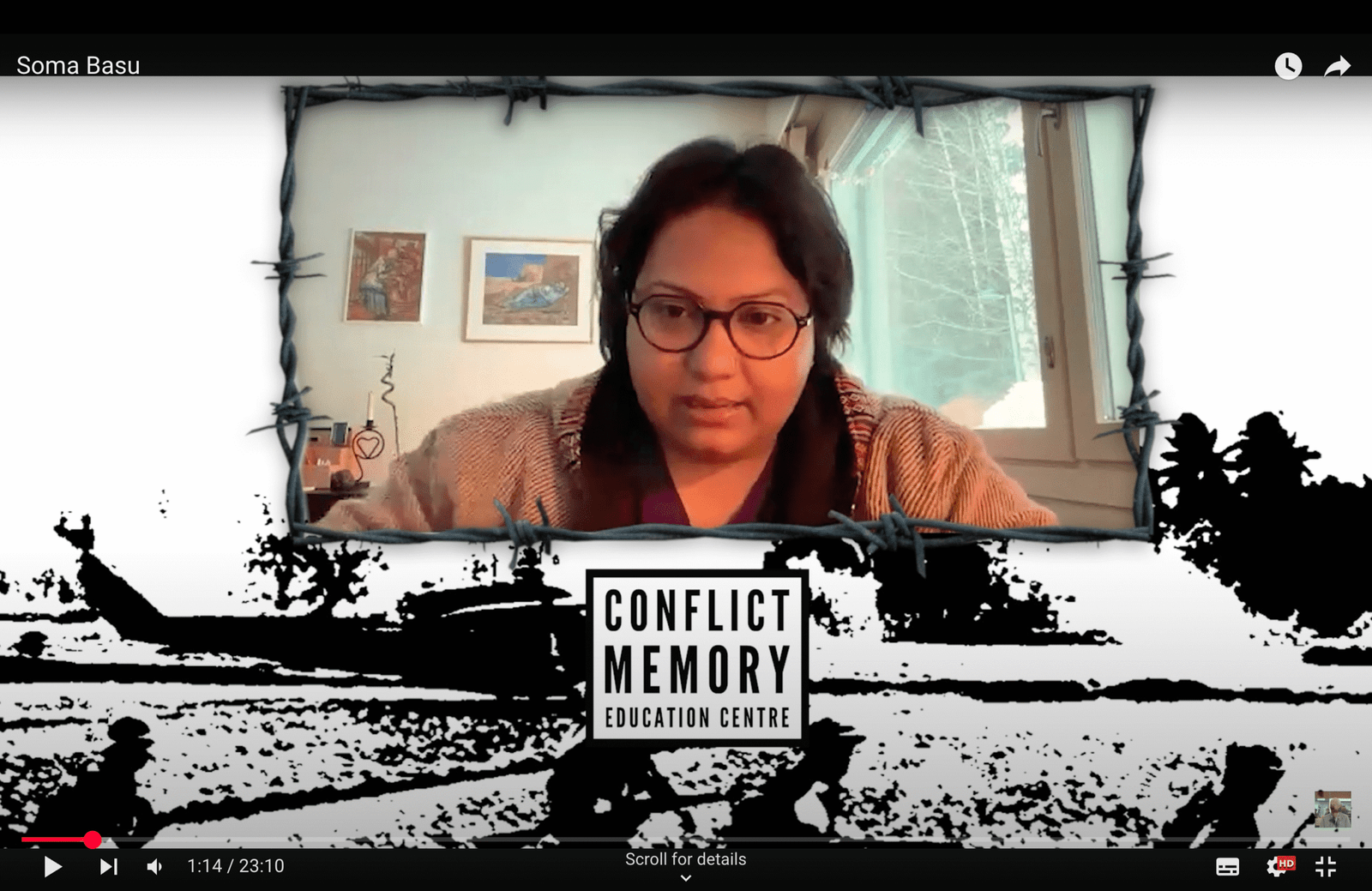
As a follow-up to the workshop, I was interviewed by John Coster (Director, Conflict Memory Education Centre) for the Conflict Memory Series: #10DaysOfConflictMemory (19th–28th February 2025). All nine interviewees in the series had been participants at the Glasgow event, continuing the conversation on how conflict memories are mediated. My interview was published on Day 8, where we discussed the challenges of remembering and forgetting, and the persistence of mobile memories of communal violence.
Interviews of other scholars who presented at the workshop can be viewed here.
Also watch the Introduction to #10DaysOfConflictMemory by Dr Paul Reilly (University of Glasgow) below.
More information about the workshop, series, and the fascinating work by other scholars can be found here.